Resizing Mounted Ext2 File System May Cause Corruption

EXT2 (second extended) file system is an advanced file system for Linux kernel. This is the replacement of external file system. It is possible to resize the ext2 file system, while mounted, and the system it uses. It is possible to use ext2online utility. The process of resizing the file system while applications are open files and write data to a file system is fine. However, you should always have complete and valid backup of critical data before installing or online file system mounted. In case something goes wrong, you may encounter serious data loss situation, which requires the Linux data recovery to be fixed.
You can resize only mount Ext2 file system. To use ext2online utility, you must have online support for ext2 size (CONFIG_EXT2_RESIZE) be enabled on your Linux Kernel. You can enable this feature after applying the appropriate patch for the 2.x series kernel.
File system, which is specified by the device, or Mountpoint must be mounted immediately. By default, the mounted file system is increased to fill the device. If you specify an additional parameter size, and then use it instead of a certain size. If the optional modifier is not available, it is taken from Ext2 file system blocks.
How to Recover Linux Data After Hard Drive Crash?
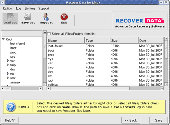
Is Linux hard drive crashes quickly each time you boot your system? Are you able to boot your Linux computer and access data from it? Well, the problem May occur due to many reasons, which cause hard drive crashes. Most often, the problem is due to missing or corrupted data structures of your Linux hard drive. For the same, the operating system can not find files stored on your hard drive and access them. At this point, you have to opt for Linux data recovery solutions to get your valuable data recovered.
The fall of the Linux hard drive is indicated by different symptoms. Such symptoms include the following:
Your Linux operating system on your computer does not boot.
You can find a variety of error messages such as "No Fixed Disk Present" or "DISK BOOT FAILURE, INSERT SYSTEM DISK and press ENTER"
Black or blank screen after you up your system.
The system reboots, freezes, or stops responding frequently.
"Operating system not found" and "Drive not formatted" message.